
You're already paying for the trip in pieces, even if you haven't booked it yet. A subscription renews, a delivery app order sneaks in, a phone plan stays bloated, and then the vacation fund feels too small when the tickets finally show up. Saving on vacation is not just about hunting a cheaper fare, it's about choosing lower-cost dates, comparing the full trip, cutting avoidable outflows before you travel, and sending every skipped charge toward one clear goal.
That matters because the summer travel market is huge. Allianz Partners forecasted that Americans would spend $226.6 billion on summer vacations in 2025, with an average intended outlay of $2,867 per household Allianz Partners 2025 summer travel forecast. Even a small trim adds up fast when you stop treating travel savings as a one-time win and start treating it like a yearly habit. FloosYo fits that approach well because it surfaces recurring charges, projects them monthly and yearly, sends renewal reminders, and lets you use voice entry for costs your bank won't see.
A small recurring amount looks harmless once. Over a year, it becomes a travel line item.
Table of Contents
- 1. Book Flights and Accommodations During Off-Peak Seasons
- 2. Use Fare Alerts and Price Comparison Tools Strategically
- 3. Plan and Book Accommodation Using Alternative Platforms
- 4. Combine Flights and Hotels Into Package Deals
- 5. Reduce Ground Transportation and Activity Costs Through Planning
- 6. Negotiate and Lock In Group Rates for Flights and Lodging
- 7. Use Loyalty Programs and Travel Credit Cards Strategically Without Interest
- 8. Avoid Impulsive Dining and Discretionary Spending While Traveling
- 8-Point Vacation Savings Comparison
- Turn Small Skips Into Your Next Departure
1. Book Flights and Accommodations During Off-Peak Seasons
The fastest savings usually come from changing the date, not the destination. If you can move a trip out of the highest-demand weeks, you give yourself more room on airfare, lodging, and even local transport. That's why off-peak travel belongs at the top of every travel budget decision, especially when your calendar has some flexibility.
A 2023 travel booking analysis found that domestic trips were being planned about 1.5 weeks closer to departure than before the pandemic, while Europe trips were booked 7 weeks ahead instead of 9 weeks in 2019 Self's travel cost analysis. That timing shift matters because it shows how much pricing can move around your booking window. If your trip isn't locked to school breaks or company leave dates, move it a little earlier or later and compare the full itinerary cost before you commit.
Use flexibility as a budget tool
Planning around shoulder seasons is more effective than chasing a single cheap fare. A weekday departure, a different month, or a shorter stay can bring the total down without changing the trip itself. One practical example is simple, travel on a Tuesday instead of a Friday when the route allows it, and check whether the lower fare still holds once you add the hotel and transport.
Use FloosYo to keep recurring travel subscriptions honest. If you pay for flight alerts, hotel memberships, or booking site perks, log them as recurring costs and look at the yearly total before renewal. If the service doesn't consistently help you land better dates, skip it and redirect that money to the trip fund. For structured monthly planning, the monthly budget planner can help you see whether travel savings are competing with other regular outflows.
Practical rule: if the trip is optional on dates but fixed on destination, change the dates first.
2. Use Fare Alerts and Price Comparison Tools Strategically
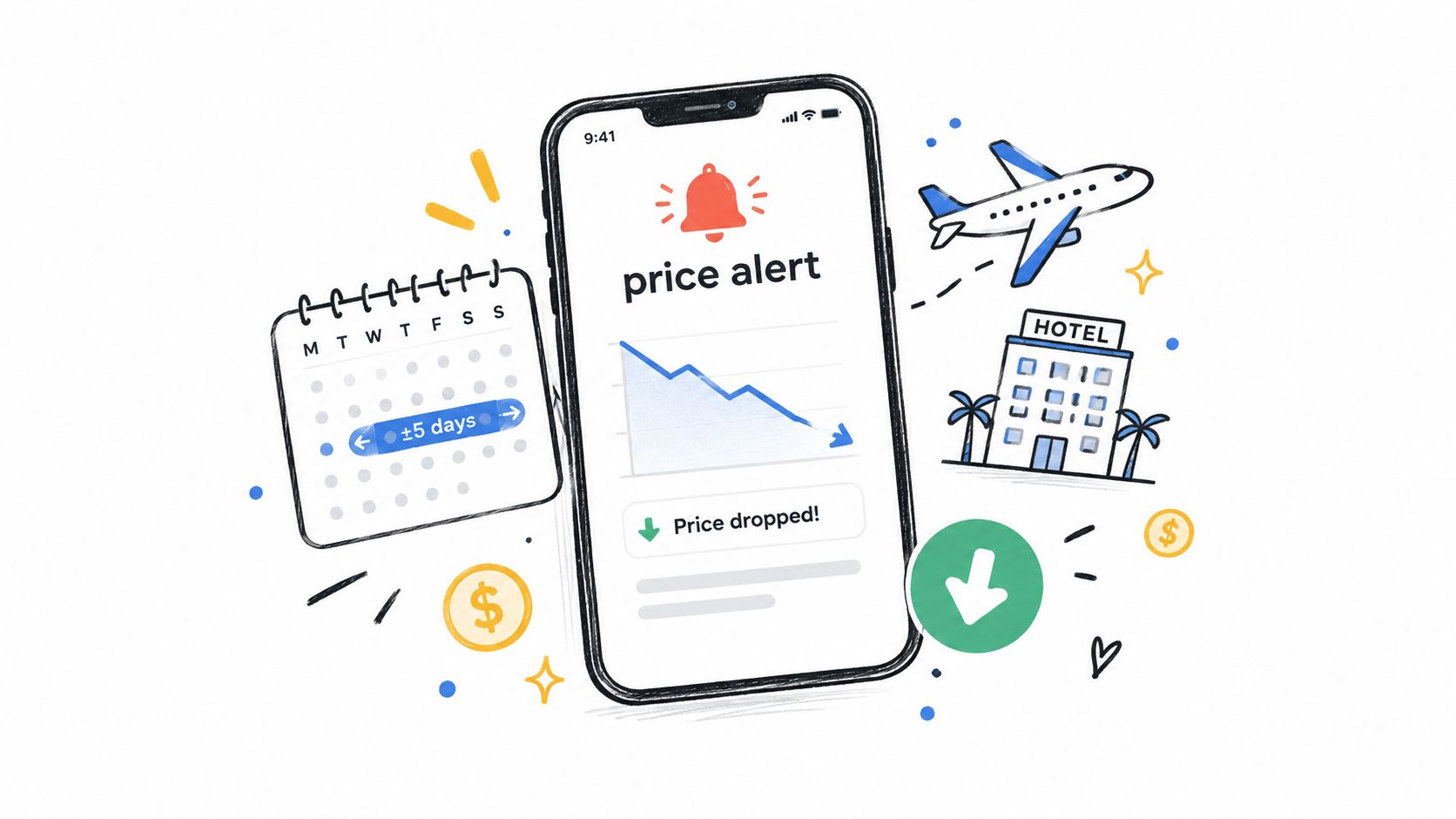
Stop refreshing the same flight page and hoping for a better number. Fare alerts and price comparison tools do the checking for you, so you can set a target and wait for the market to meet it. That matters because travel prices move, while your other recurring costs keep draining the same budget every month.
Booking data shows clear price gaps between channels, which is why comparison tools are worth setting up before you commit. A cost analysis found that flights booked through online travel platforms averaged $972.20 compared with $1,083.22 booked directly, and hotel rooms were about 31% cheaper through the lowest-cost OTA in the sample Self's booking comparison. That does not make every OTA the cheapest option, but it does prove direct booking is not automatically the best deal.
Make alerts earn their keep
Set alerts early enough to catch real drops, not last-minute panic pricing. Use a flexible date range, then compare the alert result against the full trip cost, not only the ticket. If the fare looks good but the hotel and transfer costs climb, the trip is still overpriced.
FloosYo helps you keep alert services honest. Voice-log the subscriptions you keep forgetting, then check the annual projection before renewal. If a tool does not help you make a booking decision or track an actual trip, cut it and move that money toward the vacation fund. Once you do find a solid rate, use voice entry to save the destination, travel dates, and final price so you can compare future offers against a real baseline.
3. Plan and Book Accommodation Using Alternative Platforms
Hotels are only one option, and they are often not the cheapest. For longer stays, family trips, or trips where you want to cook a few meals yourself, vacation rentals and local guesthouses often deliver better value than standard hotel rooms. The savings show up in the nightly rate, plus the meals and laundry you avoid paying for outside.
An illustration makes the trade-off clear. A 7-night Airbnb at $80 per night with a 20% weekly discount comes to $448 total, while a comparable hotel at $140 per night totals $980. That gap is hard to ignore before you even count breakfast, kitchen access, or a washing machine. The same logic applies to longer stays, where monthly discounts can make a property that looks expensive at first glance the better value overall.
Compare what the room actually saves
The cheapest nightly rate is not always the best trip value. A place with a kitchen can cut restaurant spending, and a place with laundry can keep you from overpacking or paying for wash services. If you are traveling with other people, the savings are even easier to see because you can spread fixed costs across the whole group.
Use FloosYo to check whether booking-site memberships are worth keeping. If a loyalty subscription or annual platform fee does not deliver better pricing on the kinds of stays you book, cancel it. Move the saved amount into the trip goal so the money does not drift back into routine spending. A practical budget check helps too, and comparing accommodation against food and transport in one place keeps the nightly rate honest.

4. Combine Flights and Hotels Into Package Deals
Package deals work when you already know you need both the flight and the room. In that case, a bundle can simplify planning and lower the total price. If you're still unsure about dates, destinations, or accommodation style, compare everything separately first so you don't buy convenience at a higher cost.
The numbers in the brief are clear. A flight plus a 5-night hotel booked separately at $600 + $700 totals $1,300, while the same package on Expedia comes to $1,100, a 15% savings. A transatlantic package that bundles flight, 7-night hotel, and rental car can save $400 to $600 versus booking each piece alone. Package pricing can absolutely help, but only when every part of the bundle is something you would have booked anyway.
Check the bundle, then check the parts
The danger with packages is overbuying. Some bundles add fees, forced extras, or cancellation terms that make the headline price look better than the actual one. Compare the bundle price against individual components on separate sites, then look at the cancellation rules before you pay.
FloosYo helps by giving you a reminder before you lock in the trip. Log your target dates, destination, and budget with voice entry, then create a comparison prompt so you check bundles before buying a la carte. If a sale usually appears close to departure, keep the reminder tied to that window so you don't rush into a package too early. The goal is simple, buy the version of the trip that costs less, not the one that feels easiest in the moment.
5. Reduce Ground Transportation and Activity Costs Through Planning
Many travelers focus on flights and ignore everything after landing. That is a mistake. Ground transport, tours, meals out, and attractions can take a large share of the budget, and once those costs start piling up, the trip gets expensive fast. Plan them before you leave so you are not paying tourist prices for decisions that should have been made on day one.
Transportation and activities often represent 30 to 40% of total vacation spend, enough to change the whole trip if you do not control it. As an illustration, a 3-day public transit pass in Paris costs about €45, saving €20+ versus single trips, while a museum pass covering 5 attractions saves €25 to €40 compared with individual admissions. A practical budget check helps too, and the on-a-budget guide is useful when you want to compare ground transport against food and accommodation in one place.
Build a cheaper movement plan
Buy multi-day transit passes when they fit your route, and use walking or cycling when the distance is short. Download offline maps so you are not relying on mobile data just to get around. Group paid activities together and leave space for free ones, because you do not need an attraction ticket every day to make the trip feel full.
Use FloosYo to track recurring travel spending patterns, especially rideshare app subscriptions or annual attraction memberships. If the math only works for one trip a year, drop the subscription and pay as you go. The same rule applies on the road. A few planned local choices are almost always cheaper than a string of last-minute rides and ticket purchases.
Pay for convenience when it saves time you actually value. Pay for habit only when the numbers hold up.
6. Negotiate and Lock In Group Rates for Flights and Lodging
Group travel changes the math. Airlines, hotels, and car rental desks often have separate group booking options that don't show up in public search results, and those rates can beat what each person would pay alone. If you're traveling with family, friends, or a work group, don't book everyone individually and hope for the best.
The verified data here is straightforward. Group bookings of 6 or more people can qualify for discounts on flights, hotels, and car rentals, and dedicated group booking teams can offer rates 10 to 20% lower than public pricing. A group of 10 booking transatlantic flights at group rate can save €150 to €250 per person, or €1,500 to €2,500 total. For a hotel block, eight people at a 20% discount can save €640 to €960 for a week.
Put one person in charge
The cheapest group trip is the one with one coordinator and clear deadlines. Pick one person to handle communication, collect deposits, and confirm written terms. Then use reminders so nobody acts surprised when payment is due.
FloosYo is useful here because it can track each person's commitment and due date. Voice-log the amount, set the reminder, and keep the shared costs visible so you aren't chasing people three days before booking closes. If someone drops out, revise the trip early instead of absorbing the full cost yourself. That's the cleanest way to keep the savings real.
7. Use Loyalty Programs and Travel Credit Cards Strategically Without Interest
Rewards only help when they don't drag in financing costs. If you carry a balance, the points game loses its edge fast. The only sensible way to use a travel card is to pay it in full every month and treat any reward as a bonus on spending you were already going to do.
The numbers in the brief show the logic. A $150 annual card fee with 100,000 sign-up points worth $1,500 in travel breaks even immediately. Consolidating $30,000 in annual travel spending on one card earning 3% back gives $900 in annual rewards, assuming you pay the card off in full each month. Hotel elite status from 25 earned nights can deliver $200+ in annual perks such as breakfast, upgrades, or lounge access if it reduces other costs.
Use rewards only when the fee clears
Don't sign up for a card just because the bonus looks large. Meet the threshold with normal spending, not with extra purchases you wouldn't otherwise make. Then compare the fee, the actual redemption value, and the travel you expect to book this year.
FloosYo helps you keep the full picture visible. Track annual fees, memberships, and loyalty subscriptions, then compare them against the rewards you use. If the numbers stop making sense, cancel the card or downgrade the program and move the saved amount into a trip goal instead. The point is to reduce outflows, not to chase points for their own sake.
8. Avoid Impulsive Dining and Discretionary Spending While Traveling
Many budgets break right here. A few extra coffees, airport snacks, souvenir buys, and tourist-area meals don't feel like much in the moment, but they stack up over the trip. If you want the vacation to stay affordable, decide in advance how much you'll spend on daily extras and stick to it.
The brief gives a useful comparison. Eating breakfast at your accommodation, packing a market lunch, and having one restaurant dinner daily costs €25 to €35, while three meals out cost €60 to €80. Skipping 3 to 4 impulse coffee or snack purchases daily saves €45 to €70 over a 2-week trip. Those are the kinds of costs that can move a trip from comfortable to messy.
Keep your food and extras deliberate
Eat your main meal at lunch when you can, because many restaurants offer lower-priced set menus then. Buy a simple breakfast from local shops or use what your accommodation already provides. Then choose one or two paid treats that actually matter to you and skip the rest.
FloosYo works well for this because it can capture daily discretionary spending by voice each evening. Log the lump sum, look at the pattern after a few days, and correct the next day before the trip gets away from you. If you also track recurring restaurant apps or attraction memberships, you'll see which ones deserve another month and which ones should be cut. The how to track spending guide is useful if you want a cleaner way to review those habits after the trip.
8-Point Vacation Savings Comparison
| Strategy | 🔄 Complexity | ⚡ Resources / Cost | 📊 Expected Outcomes | 💡 Ideal Use Cases | ⭐ Key Advantages |
|---|---|---|---|---|---|
| Book Flights and Accommodations During Off-Peak Seasons | Low–Moderate, requires date flexibility | Low, no premium tools needed | High, 30–50% cheaper on average; fewer crowds | Flexible travelers, families who can shift dates | Large savings, better availability, improved service |
| Use Fare Alerts and Price Comparison Tools Strategically | Low, setup and monitoring | Low–Medium, some services free; premium alerts may cost | Moderate–High, captures genuine price drops; timing-dependent | Deal hunters, flexible-date travelers | Time-saving, consolidated data, catches sales |
| Plan and Book Accommodation Using Alternative Platforms | Moderate, research + negotiation | Medium, platform fees; potential savings for long stays | High for multi-night stays, weekly/monthly discounts 20–40% | Groups, families, long-term stays | More space/amenities, cooking reduces food costs |
| Combine Flights and Hotels Into Package Deals | Low–Moderate, compare bundles vs a la carte | Low, often single payment; may include add-ons | Moderate, typical 10–25% combined savings | Travelers booking both flight + hotel simultaneously | Simplified booking, single itinerary, possible better cancellation terms |
| Reduce Ground Transportation and Activity Costs Through Planning | Moderate, itinerary and local research required | Low, transit passes, walking, markets are inexpensive | Moderate–High, can cut 30–40% of daily spend | Urban trips, active explorers, budget-conscious families | Lower daily spend, authentic local experiences, simpler budgeting |
| Negotiate and Lock in Group Rates for Flights and Lodging | High, coordination and deposits required | Medium, deposits and admin time | High, 10–30% per-person savings typical | Groups of 6+, reunions, destination weddings | Significant per-person discounts, shared logistics management |
| Use Loyalty Programs and Travel Credit Cards Strategically (Without Interest) | Moderate, account management and discipline | Medium, annual fees vs potential rewards | High (if managed), large value from sign-up bonuses and redemptions | Frequent travelers who pay balances monthly | Free nights/upgrades, sign-up bonuses, ancillary fee savings |
| Avoid Impulsive Dining and Discretionary Spending While Traveling | Low, requires personal discipline and planning | Very Low, planning and preps reduce costs | Moderate–High, discretionary spend cut 30–50% | Budget travelers, families on fixed budgets | Predictable daily spend, less clutter, more authentic choices |
Turn Small Skips Into Your Next Departure
The best saving on vacation strategy is simple. Pick flexible dates first, compare the full trip cost instead of a single fare, check recurring charges before they renew, and keep a tight eye on daily spending once you're there. If a flight is cheap but the room, transport, and food are expensive, the trip is still overpriced. If you cut a few recurring costs now, you create room for a trip later without borrowing from next month's necessities.
A yearly view makes that easier to see. If a household trims one or two recurring charges, skips a few impulse buys, and keeps travel spending deliberate across the year, those small decisions can fund part of a trip without any dramatic sacrifice. The exact outcome depends on your actual costs, but the pattern is consistent. What feels minor in one week becomes meaningful when FloosYo projects it over a month and a year, sends a reminder before renewal, and shows the savings path before the next charge lands.
That's where the app fits into this topic. FloosYo can surface recurring charges from your bank record, let you add voice notes for spending the bank can't see, project monthly and yearly totals, and route saved amounts into one active goal automatically. It's useful when you're trying to reduce subscriptions, avoid surprise renewals, and move the freed-up money toward a trip instead of letting it drift back into everyday spending. Start by reviewing one recurring charge and one travel habit today, then use those projections to decide what gets cut before your next booking.
Visit FloosYo for the product overview and use it to turn one skipped charge into the start of your next departure.
FloosYo helps you see recurring spending before it surprises you, which is useful when you're planning a trip and want the savings to happen ahead of time. Use it to project what a skipped charge could fund, keep renewal reminders in view, and move the saved amount toward a travel goal. Visit FloosYo and see how it fits your next vacation plan.