
A forgotten renewal can make a carefully planned month feel unexpectedly expensive. The problem often isn't one large purchase. It's a collection of small charges that arrive on different dates, plus everyday habits that seem too minor to track.
A 2022 C+R Research survey found that U.S. consumers estimated their subscription spending at $86 per month, while an itemized review found actual spending of $219 per month, a gap of $133 monthly and about $1,596 annually per household (C+R Research subscription spending analysis). That difference explains why asking “how much should a monthly budget be for subscriptions?” can't be answered by looking only at the prices you remember.
A monthly charge feels manageable because it arrives in small pieces. Annual math makes the commitment visible. A forgotten service, a phone add-on, cloud storage, food delivery, or a regular workday purchase can each look harmless alone while competing with savings goals and essential bills.
This guide uses one practical rule: translate every recurring cost into a realistic yearly projection before deciding whether to keep it. You'll learn how to distinguish fixed subscriptions from habits, adjust for actual frequency, set a personal allowance, and choose whether to keep, downgrade, skip, or cancel. Tools such as this guide to recurring expenses can help you recognize which payments deserve a closer look.
Table of Contents
- Introduction Why Small Recurring Charges Feel Bigger Over a Year
- How Annualized Thinking Changes Your View of Recurring Costs
- Benchmarks for How Much Should a Monthly Budget Allow
- Fixed Subscriptions Versus Daily Habits and Frequency Adjusted Math
- A Simple Decision Framework to Keep Downgrade Skip or Cancel
- Putting Projections and Reminders to Work With FloosYo
- Your Next Month Plan and How to Stay Within Your Allowance
Introduction Why Small Recurring Charges Feel Bigger Over a Year
You notice the problem when a renewal appears on your statement. The charge may be familiar, but the timing isn't. You thought the subscription was part of your normal spending, then several other payments arrive around the same period and the month feels tighter than expected.
The difficulty comes from fragmentation. Streaming, software, fitness, phone services, delivery memberships, and other recurring payments may use different merchants and billing dates. A daily drink or occasional ride-hailing trip is even harder to remember because it may not appear as a subscription at all.
A charge doesn't need to be large to deserve an annual review. It only needs to repeat.
The C+R Research findings illustrate the scale of this memory problem. Consumers reported $86 per month, but category-by-category accounting reached $219 per month, producing a $133 monthly difference and $1,596 over a year (C+R Research subscription service statistics). The lesson isn't that every household spends the same amount. It's that people often remember the obvious services and miss smaller charges, add-ons, duplicate accounts, and habits.
A useful answer to “how much should a monthly budget be?” starts with visibility rather than a universal percentage. List each recurring expense, identify its actual frequency, and calculate what it represents over a year. Then compare that total with essential outflows and the goals you want your income to support.
FloosYo's annualized view applies this logic before the next charge lands. It can surface repeating bank transactions, accept voice or text entries for spending the bank can't see, and show monthly and yearly projections so a small line item becomes easier to evaluate. The purpose isn't to eliminate every convenience. It's to make each one a deliberate choice.
How Annualized Thinking Changes Your View of Recurring Costs
A monthly price answers only one question: what leaves your account during one billing period? The yearly projection answers the more important question: what commitment does this charge create if you keep it?
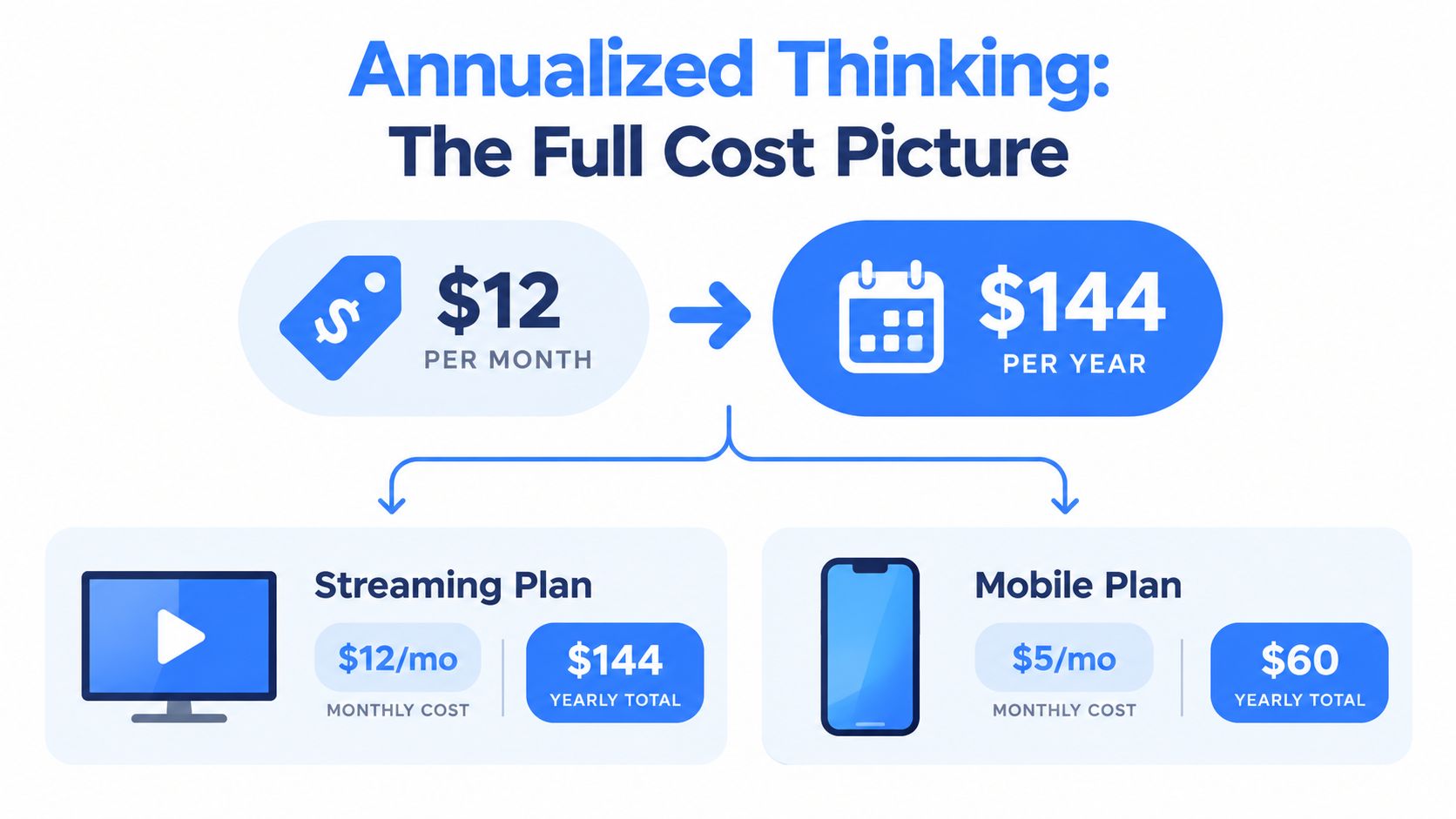
For a monthly subscription, multiply the fee by the number of monthly payments in a year. A $12 monthly plan becomes $144 annually. A $5 monthly phone add-on becomes $60 annually. The arithmetic is simple, but the perspective changes because yearly totals can be compared with larger priorities instead of isolated transactions.
Start with the billing rhythm
The multiplication depends on frequency. Monthly payments use twelve billing periods in a year. Annual plans use the annual fee directly. Six-month, quarterly, or irregular charges need to be converted according to how often they occur, rather than treated as monthly expenses by guesswork.
A fixed phone plan is easy to project because the charge follows a known rhythm. A food delivery habit isn't fixed, even if it feels regular. For that expense, use the typical price and the number of times you order. If your behavior changes by season, create a conservative estimate based on your recent pattern instead of assuming the maximum.
Compare commitments, not labels
“Subscription,” “bill,” and “habit” are useful labels, but they don't tell you whether a cost deserves to stay. A low-priced service can be poor value if you rarely use it. A higher-cost tool may be reasonable if it supports work you actively do and replaces another expense.
The annual total gives you a common language for comparison. You can place a streaming plan, a cloud service, and a recurring delivery habit on the same list. That makes it easier to see duplication and ask whether the next year of access is worth the projected outflow.
FloosYo's annual total cost approach follows this decision-first logic. The point isn't to make a monthly amount look alarming. It's to show the full cost early enough for you to choose intentionally.
Benchmarks for How Much Should a Monthly Budget Allow
There is no universal subscription allowance. A student, freelancer, family, and young professional may have different incomes and required expenses. Use a benchmark as a ceiling, not as a reason to spend up to an average.
Recent U.S. transaction data offers context. Bank of America Institute reported that subscription spending rose 7.7% year over year in July 2026, while subscription growth exceeded total card-spending growth by more than 1.5 percentage points over the prior two years (Bank of America Institute subscription spending data). Entertainment and retail made up roughly 43% of subscription spending. Food, fitness, and fashion represented another 26%.
| Category | Share of Subscription Spend | Example Monthly Cost | Yearly Cost |
|---|---|---|---|
| Entertainment and retail | Roughly 43% | Use your actual charge | Monthly cost × 12 |
| Food, fitness, and fashion | Another 26% | Use your actual charge | Monthly cost × 12 |
| Software, phone extras, and cloud tools | Not separately specified in the cited data | Use your actual charge | Monthly cost × 12 |
| Other recurring services | Remaining spending categories | Use your actual charge | Monthly cost × 12 |
These categories help you classify charges, not set a target. Check the full list, including food delivery, fitness, fashion, software, and retail memberships. A budget can feel crowded even when the media subscriptions look inexpensive.
Build a personal allowance
Start with monthly income and required outflows. Then list recurring discretionary charges, including habits that are not formal subscriptions. Set an allowance that leaves room for obligations and the goals you value.
Give the allowance two limits:
- Monthly ceiling: the amount you can accept in an ordinary month.
- Annual ceiling: the total you can accept if every listed charge continues.
The annual ceiling exposes the effect of many small approvals. A service that costs a little each month still claims money throughout the year, just as a small leak can empty a container when it never stops. The 2026 consumer subscription survey found that U.S. adults who subscribed within the last year spent an average of $111 per month, or $1,332 per year, and wasted about $21 monthly, or $252 annually, on subscriptions they did not use (CNET's 2026 subscription survey). Treat these figures as reference points, not recommendations.
If your projected total exceeds the allowance, review the list in a practical order. Check unused services first, then duplicates, followed by charges nearing renewal. A renewal date gives you a natural decision point: keep the item, downgrade it, skip the next term, or cancel before another annual cost begins. A personal cap works when every retained charge has a clear reason.
Fixed Subscriptions Versus Daily Habits and Frequency Adjusted Math
A monthly subscription and a repeated purchase can look similar in a budget, but their yearly totals require different inputs. A subscription follows its billing schedule. A habit follows your actual behavior, which may change with workdays, seasons, or workload.
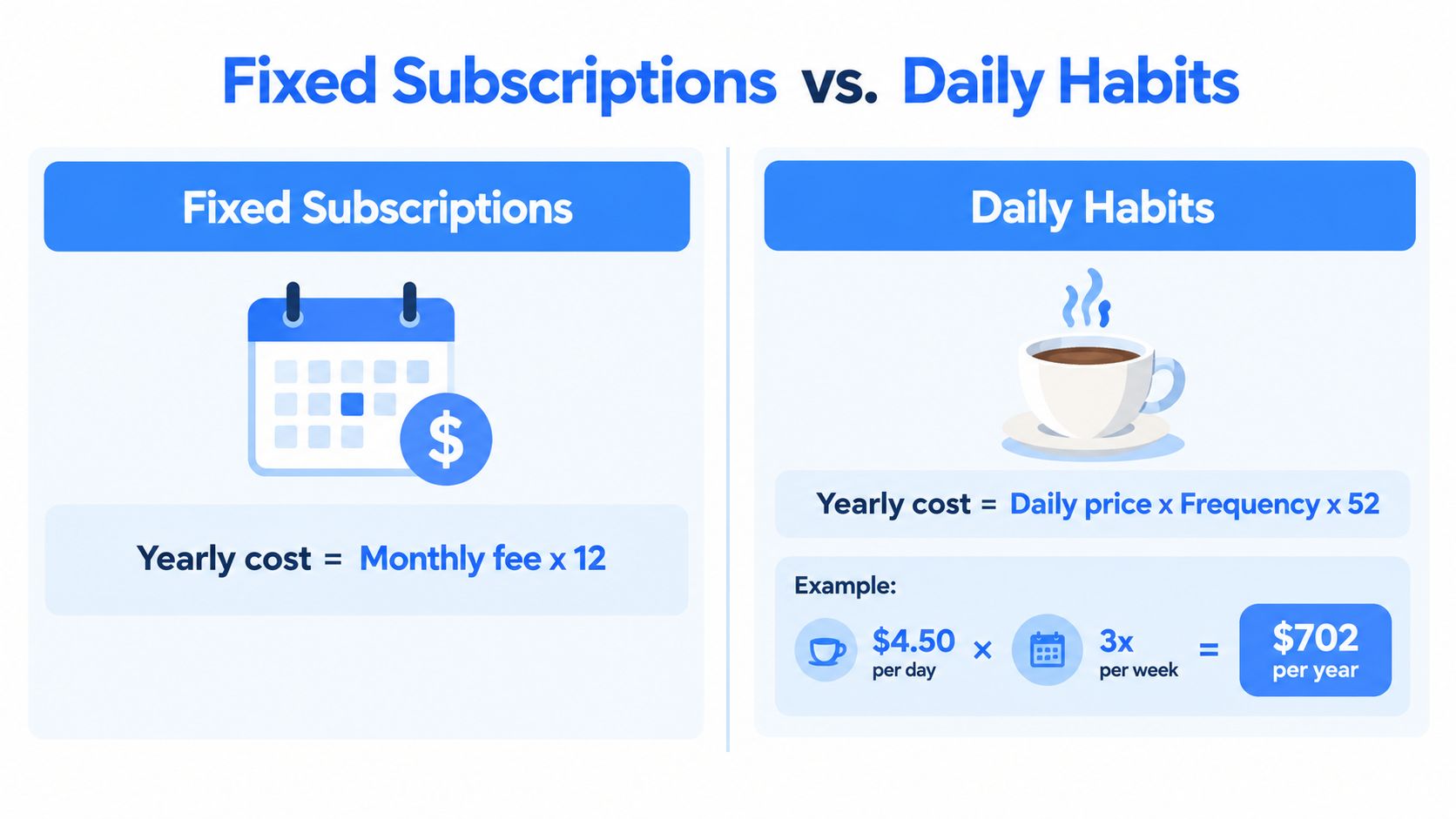
For a fixed plan, calculate the annual commitment directly:
Yearly cost = monthly fee × 12
For a habit, replace the assumption of daily use with the number of times you buy. A $5 weekday coffee costs about $1,300 annually, not $1,825, because the calculation reflects weekday frequency instead of 365 purchases (frequency-adjusted habit cost guidance).
Use the right formula
For a recurring habit, use:
Yearly cost = price per purchase × purchases per week × 52
A $6.50 workday drink costs about $1,696 annually when it occurs on workdays rather than every day, using the same frequency-adjusted approach. Accurate math keeps the decision grounded. An inflated total can create unnecessary urgency, while a low estimate can hide a meaningful drain.
| Expense type | What to record | Calculation |
|---|---|---|
| Fixed subscription | Billing amount and billing frequency | Convert the billing schedule into a yearly total |
| Optional service | Price, use, and renewal date | Yearly cost minus the amount avoided by downgrading |
| Daily or weekly habit | Price and actual frequency | Price × purchases per week × 52 |
| Seasonal habit | Price, frequency, and active months | Use the periods when the habit actually occurs |
Label the expense before judging it
Mark each item as fixed, optional, or habit-driven. A fixed bill may call for keeping or downgrading the plan. An optional subscription may be paused. A habit can often be reduced by changing its frequency rather than canceling an account.
The label also clarifies the savings. Skipping one cycle saves the charge for that cycle, not the full annual total. Reducing several weekly purchases to fewer purchases requires recalculating the yearly cost with the new frequency. Use that revised figure when deciding whether the expense belongs in your allowance, especially before its next renewal. Realistic math supports choices you can maintain.
A Simple Decision Framework to Keep Downgrade Skip or Cancel
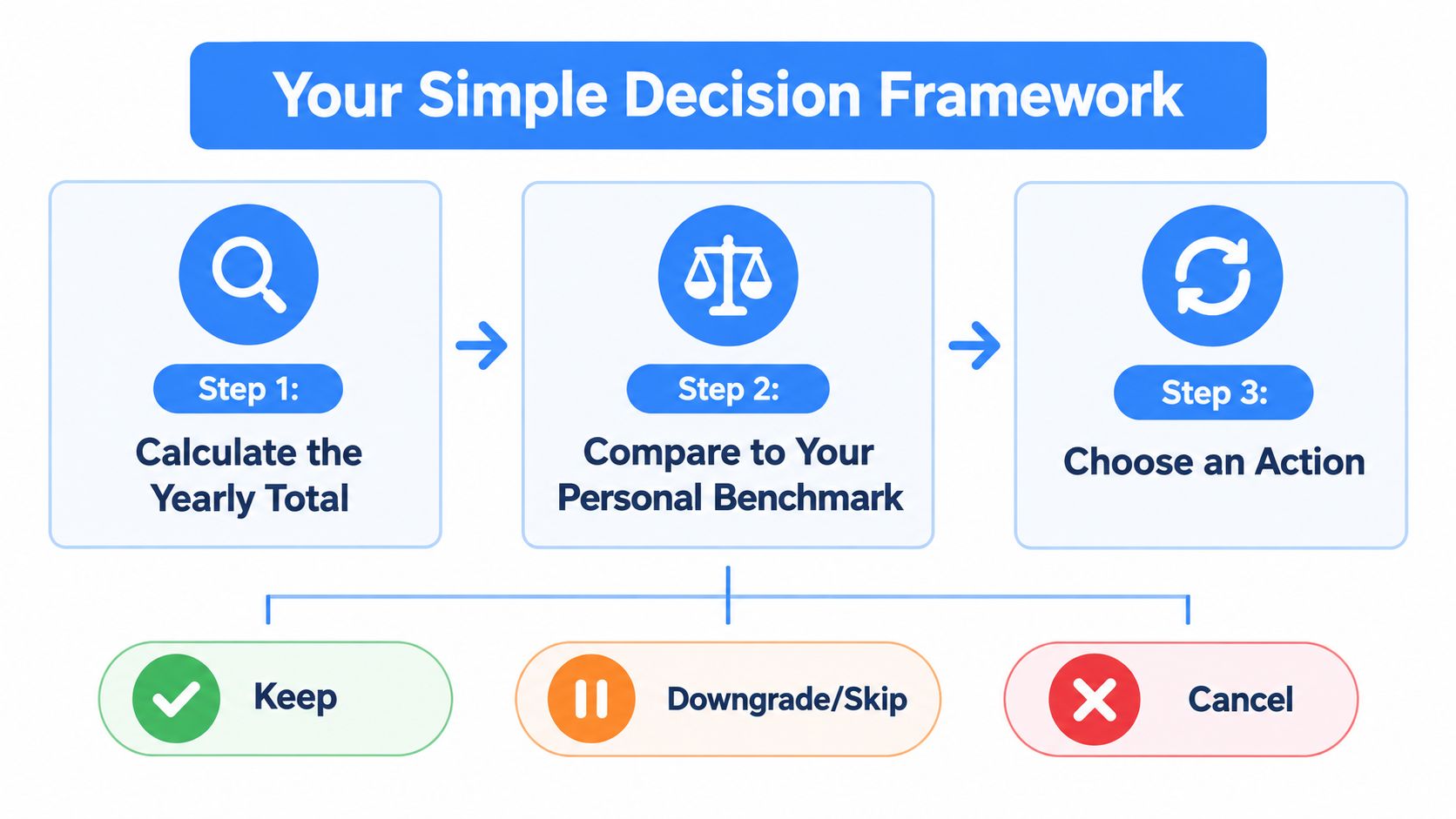
Once you have a yearly projection, use a repeatable decision sequence. The question isn't whether a service is good in general. It's whether this specific charge deserves its place in your allowance before the next billing event.
Calculate the commitment
Record the amount, billing frequency, next renewal date, and recent usage. Include duplicate coverage. Two services may perform similar jobs, or a premium tier may offer features you haven't used.
Then identify the saving attached to each possible action:
- Keep: no immediate saving, but you retain full access.
- Downgrade: save the difference between tiers while keeping core access.
- Skip: avoid one cycle if the provider allows it, then reassess.
- Cancel: remove future charges after confirming the cancellation terms.
Compare value with timing
A service used often may justify its cost even if it isn't essential. A service used rarely should face a higher bar, especially when a free or already-paid alternative exists. Renewal timing matters because a good decision made too late may not prevent the next charge.
For U.K. consumers, the Financial Conduct Authority says a recurring card payment can be stopped by contacting the merchant or card issuer. The issuer must stop future payments once asked, but the request needs to be made by the end of the business day before the next payment is due, or the charge may still go through (FCA guidance on recurring card payments).
California consumers have another timing protection. The state's automatic-renewal law requires an annual reminder for auto-renewal or continuous-service plans, including the product or service, charge frequency and amount, and cancellation method (California automatic-renewal consumer alert).
Set reminders before the charge
For subscriptions billed every six months or less, Mastercard guidance says cardholders should receive an electronic reminder at least 7 days and no more than 30 days before the next billing date, including subscription terms and cancellation instructions (Mastercard recurring payment guidance). Use that window to decide, not merely to notice the charge.
You can also watch this short overview for a visual explanation of recurring-spend decisions:
A practical checklist looks like this:
- Keep it when you use it consistently and the annual cost fits your allowance.
- Downgrade it when you need the service but not the current tier.
- Skip a cycle when usage is temporary or seasonal.
- Cancel it when you don't use it, duplicate it, or can't defend the yearly cost.
For more help organizing those actions, use this subscription management guide as a reference point.
Putting Projections and Reminders to Work With FloosYo
Manual review fails when the information is scattered. Bank statements show transactions, but they don't always tell you which charges repeat, what they cost over a year, or when the next decision is due. A workable system needs to bring those details together without requiring you to remember every merchant.
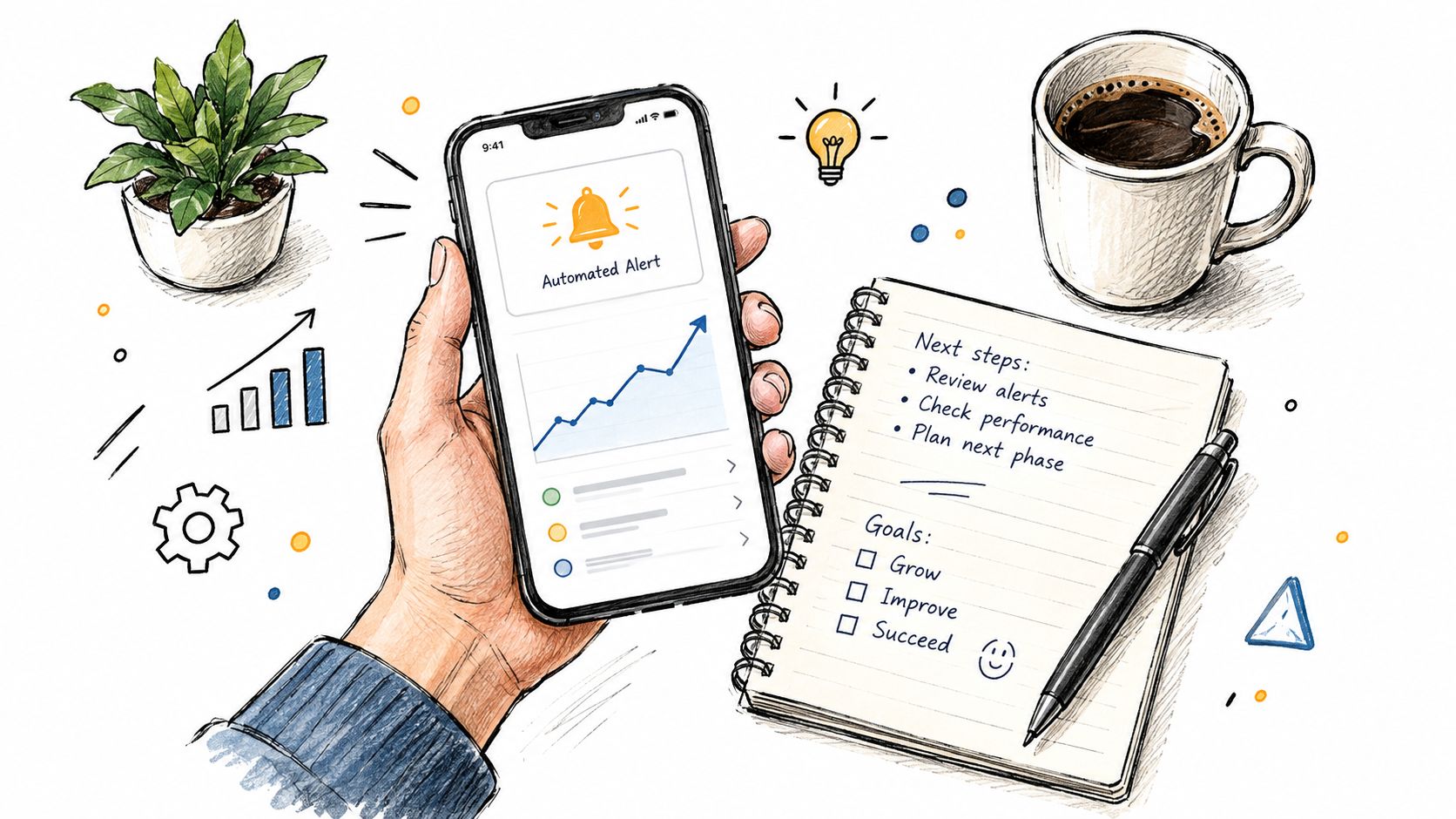
FloosYo connects to bank accounts through Plaid using read-only access, detects repeating charges, and files them as recurring expenses at their observed amount and rhythm. It can attach merchant logos, organize transactions into customizable categories, and show monthly and annual projections for each expense.
Capture what the bank can't see
Cash purchases and informal habits don't appear in bank transaction history. Voice or text entry can fill that gap by turning a natural note into an amount, category, and frequency. That makes the frequency-adjusted method practical for coffee, ride-hailing, food delivery, or other repeated purchases.
The app also provides pre-charge notifications for renewals and consolidated digests when several expenses are due together. Instead of discovering a charge after it posts, you get a prompt to decide whether to keep, skip, or cancel.
Turn avoided spending into a visible goal
A skipped bill can become an invisible saving unless you record it. FloosYo can move the saved amount into a selected savings goal automatically, while its widgets show due items, goal progress, and budget standing. The design uses one goal at a time, which keeps the result focused rather than spreading small savings across competing targets.
The bank connection is read-only, so the app reads transaction information but can't move money. Credentials are entered on the bank's own screen, and FloosYo states that financial data isn't sold to advertisers. These details matter when an app is handling personal spending information.
The larger principle is simple: projection creates awareness, reminders create timing, and recorded savings create follow-through. You don't need a chart-heavy review for every decision. You need the next charge, its yearly meaning, and a clear action in front of you.
Your Next Month Plan and How to Stay Within Your Allowance
Start with a short inventory. List every subscription, recurring bill, and repeated habit you can identify, then record its amount, frequency, usage, and next renewal date. Convert each item into an annual figure using the correct formula, including actual frequency for habits.
Choose a monthly allowance that fits after essential outflows and reflects the priorities you want your income to support. Then create an annual ceiling as a second safeguard. If the annual total exceeds that ceiling, review the least-used item first rather than making an across-the-board cut.
Set renewal checks ahead of billing dates. At each check, ask:
- Usage: Did I use this enough to justify keeping it?
- Overlap: Does another service already cover the same need?
- Action: Should I keep, downgrade, skip, or cancel?
- Follow-through: Where will the avoided amount go?
Track the saving attached to every decision toward one clear goal. Revisit the allowance when income, household obligations, or work needs change. A sustainable limit isn't the lowest possible number. It's a number you can explain, monitor, and defend before the next renewal.
FloosYo identifies recurring bank charges, accepts voice or text entries for habits, projects monthly and yearly costs, and sends reminders before renewals so you can choose whether to keep, skip, or cancel. Visit FloosYo to bring your recurring spending, yearly projections, and savings decisions into one iOS app.